The two-minute opening check for clearer shared spaces
A practical opening routine for cafés, accommodation and retail teams: clear pathways, control wet floors and prepare shared spaces before work gets busy.
5 minute read · Published · Updated
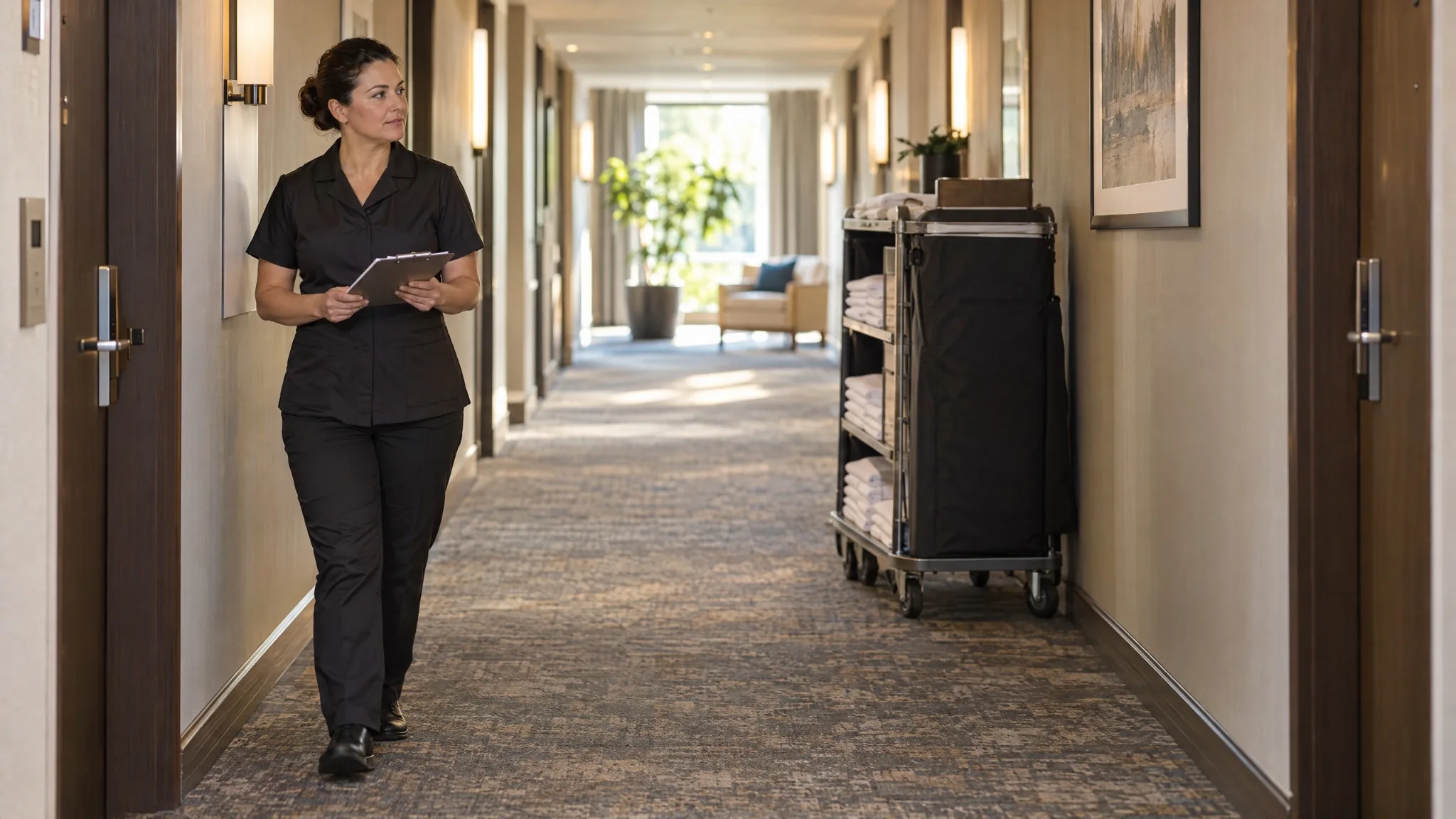
The first few minutes of a shift set the pace for everything that follows.
In a café, that might be the moment before the grinder starts and the first customers arrive. In accommodation, it may be the quiet stretch before rooms, linen and luggage begin moving through the building. In retail, it is the time between opening the doors and the first delivery, question or queue.
That is the best time for a quick shared-space check.
This is not a long inspection or a complicated form. It is a simple two-minute walk through the paths your team, guests and customers will use. The aim is to notice the small things early, when they are still easy to fix.
Two minutes is a starting habit, not a time limit. Take the time needed to respond safely. This check does not replace workplace risk assessments, required inspections, procedures or ongoing checks.
The two-minute opening check
Use the same short routine each day. It makes the habit easier to remember and means everyone knows what a good start looks like.
1. Look down
Start with the floor.
Check for wet spots, loose mats, uneven edges, packaging, cables or anything that could catch a foot. In kitchens and cafés, pay attention to the areas around sinks, cool rooms, service counters and cleaning stations. In accommodation, think about corridors, laundry areas and entries. In retail, look at aisles, stockroom doors and the path from the delivery area.
If something is wet, keep people clear and follow your workplace spill procedure. Clean it only if you are trained, equipped and can do so safely. Use suitable barriers or signs while the hazard remains; a sign does not remove the risk. Report and escalate unknown, chemical or hazardous spills.
Guidance for this section: WorkSafe Queensland — Cleaning
2. Look along the route
Stand at the start of the path and look where people will actually walk.
Can a team member carry a tray, linen, stock or cleaning gear through without needing to sidestep an obstacle? Is there enough room for someone coming the other way? Are doorways, access points, emergency routes and exits unobstructed and usable? Do not wedge fire doors open.
This is the simplest question to ask: Could the next person move through here easily?
If the answer is no, move the item or park the trolley in its designated place only if safe to do so. Report unresolved hazards and restrict access or arrange a safe alternative before the rush begins.
3. Check what has drifted overnight
Workplaces change between shifts.
A delivery may have arrived late. A chair may have been moved. A display may have crept into an aisle. A cable may have been left near a charging point. These are normal parts of work, which is why a quick reset helps.
WorkSafe Queensland notes that good housekeeping depends on clear systems for storage, maintenance and cleaning. Keeping walkways clear and using sensible storage makes the job easier for everyone.
Guidance for this section: WorkSafe Queensland — Housekeeping
4. Sort the small things straight away
The opening check only works if it leads to action.
Move the box or put equipment back only if safe to do so. Follow the spill procedure above. Report damaged mats, lighting or floor defects. For anything that cannot be made safe straight away, restrict access or arrange a safe alternative and follow your workplace reporting and handover process.
Small actions at the start of the shift prevent repeated interruptions later. They also show the team that looking after shared spaces is part of the work, not something saved for the quietest moment of the day.
5. Make it an agreed part of opening
The strongest routine is the one that has an owner.
Decide who does the walk-through at the start of the shift. It might be the opening supervisor, the first person on the floor or a rotating team member. Keep it short and practical. The point is not to add paperwork. It is to make sure someone is looking before the pace picks up.
You can also use the check as a quick conversation starter with new team members. Walk the route together and explain where equipment goes, what to do if they find a spill, and who to tell when something is not right. Our new starter safety induction checklist is a useful companion for that first-shift conversation.
A simple start that supports the whole shift
Good workplace habits are often small, repeatable and visible.
A two-minute opening check helps keep shared spaces clear, gives the team a better start and makes it easier to stay focused when service gets busy. It is a practical habit for cafés, accommodation teams and retail businesses alike.
Ozzie Spark Safety helps small businesses build safety awareness into everyday training. Managers can create role-based plans, assign relevant lessons and keep the learning record together in one place.
Safety awareness training · Training and records · Lesson library
Official sources and scope
These sources inform general principles. State guidance describes its own jurisdiction; it does not establish the law everywhere in Australia. Linked authorities have not endorsed this article or Ozzie Spark.
- Safe Work Australia — Managing risks in food services
National model WHS guidance; check local applicability · Source checked
Clean, dry floors, storage and controls for slips and trips. - WorkSafe Queensland — Housekeeping
Queensland · Source checked
Storage, maintenance, cleaning and clear walkways. - WorkSafe Queensland — Cleaning
Queensland · Source checked
Safe cleaning procedures and controls while floors remain hazardous.
Source checking is separate from independent professional review. No professional review or regulatory approval is claimed. Recheck guidance when tasks, hazards or work arrangements change.